GST is an important part of accounting and taxation in India. Businesses need to understand GST rules and maintain proper records. Accountants also need practical GST skills for their daily work.
Many students and professionals now choose a GST course to improve their accounting and taxation knowledge. A practical course can help learners understand GST in a simple way.
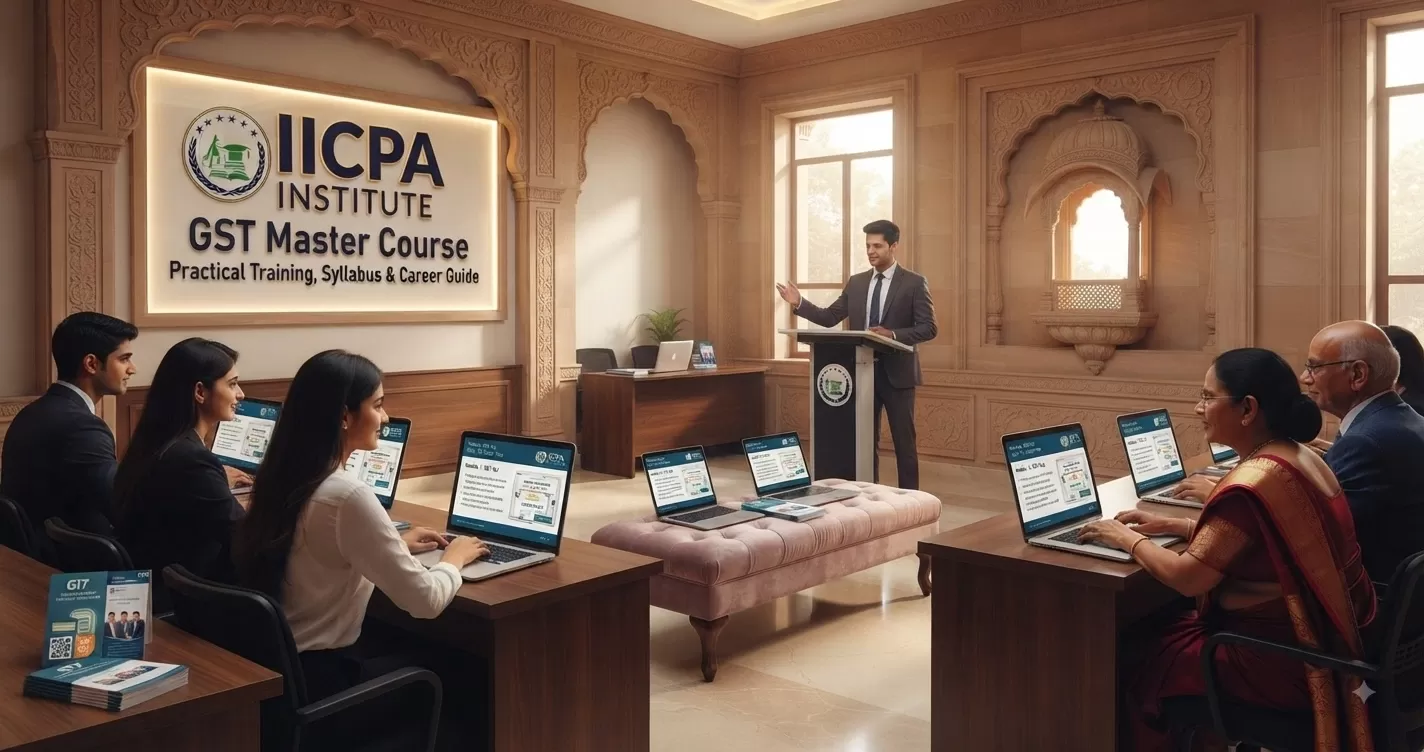
The GST Master Course at IICPA Institute is designed for students, freshers, accountants, business owners, and working professionals. The course focuses on practical GST knowledge and useful workplace skills.
What Is a GST Master Course?
A GST Master Course is a structured course that teaches the important concepts of Goods and Services Tax.
The course can start with basic GST concepts. It can then move to practical topics such as invoices, Input Tax Credit, GST returns, e-invoicing, and reconciliation.
A good GST course should include both theory and practical learning. Students should understand not only what GST is but also how GST-related work is handled in an accounting environment.
Why Learn GST?
GST is connected with many business transactions. Sales, purchases, invoices, and accounting records can have GST-related information.
GST knowledge can be useful for people working in accounts and taxation.
Learning GST can help you understand:
- GST basics
- GST rates and concepts
- GST invoices
- Input Tax Credit
- GST returns
- GST payments
- E-invoicing
- E-way bills
- GST reconciliation
- Basic GST compliance
These skills can support your accounting career.
Practical GST Training at IICPA Institute
IICPA Institute focuses on practical learning. The GST Master Course is designed to help students understand GST through simple examples and practical exercises.
Students can learn how GST is connected with accounting records. They can also understand how different transactions affect GST calculations.
Practical training can help students become more confident when working with real business data.
GST Master Course Syllabus
The exact syllabus can vary by course structure. A practical GST course generally covers the following topics.
1. GST Basics
Students first learn the basic meaning of GST.
The course can cover CGST, SGST, IGST, and UTGST. Students also learn the basic difference between intra-state and inter-state transactions.
2. GST Registration Concepts
GST registration is an important topic.
Students learn the basic registration requirements, GSTIN, business details, and common documentation concepts.
The course helps learners understand the registration process and related GST terminology.
3. GST Invoice
GST invoices are an important part of business accounting.
Students learn the main details included in a GST invoice. These can include supplier details, customer details, invoice number, taxable value, HSN or SAC, and applicable tax information.
Practical invoice examples can make this topic easier to understand.
4. Input Tax Credit
Input Tax Credit, or ITC, is an important GST concept.
Students learn how eligible input tax can be considered under applicable GST rules. They also learn the importance of maintaining proper purchase records.
ITC reconciliation is also an important practical skill.
5. GST Returns
GST return-related concepts are covered in most practical GST courses.
Students learn how sales and purchase information is connected with GST reporting. They also learn why accurate accounting records are important before preparing GST returns.
The course can introduce commonly used GST return forms and their basic purpose.
6. E-Invoicing
E-invoicing is an important area of modern GST compliance.
Students learn the basic concept of e-invoicing and understand how invoice information is handled under the applicable system.
They can also learn why correct invoice data is important.
7. E-Way Bill
An e-way bill is related to the movement of goods.
The course introduces students to the e-way bill system. They learn the basic information required and the situations in which e-way bill requirements may apply.
8. GST Reconciliation
Reconciliation means comparing records and identifying differences.
Students can learn how to compare accounting records with GST-related data. This can help identify missing entries, incorrect information, and other differences.
Reconciliation is a useful skill for accounting professionals.
Who Can Join the GST Master Course?
The course can be useful for many learners.
It can be suitable for:
- Commerce students
- B.Com students
- M.Com students
- Accounting students
- Freshers
- Accountants
- Tax professionals
- Business owners
- Working professionals
- People interested in taxation
Basic accounting knowledge can be helpful. However, beginners can also start with basic GST concepts.
Career Opportunities After GST Training
GST skills can be useful in different accounting and taxation roles.
After gaining practical knowledge, learners can explore roles such as:
- GST Executive
- Accounts Executive
- Tax Assistant
- Junior Accountant
- Taxation Assistant
- Accounts Associate
- Finance Executive
- Accounting Assistant
Career opportunities depend on education, skills, experience, and employer requirements.
Why Choose IICPA Institute?
IICPA Institute provides practical training in accounting, taxation, and financial management.
The institute focuses on simple explanations and practical learning. Students can learn GST along with other useful accounting topics.
The training can help learners understand how GST concepts are used in everyday accounting work.
For students who want to build a career in accounting and taxation, practical GST knowledge can be a useful skill.
How to Choose a GST Course?
There are many GST courses available. It is important to check the course content before joining.
Look for a course that covers both basic and practical GST topics.
You should also check whether the course includes:
- Practical GST examples
- Accounting software training
- GST invoice practice
- Return-related concepts
- ITC concepts
- Reconciliation
- E-invoicing
- E-way bill
- Latest applicable GST updates
A practical syllabus can help you gain useful workplace knowledge.
Keep Learning About New GST Rules
GST rules and procedures can change over time. New notifications, circulars, and amendments may affect businesses.
Students and professionals should keep themselves updated. They should check the latest official information before making GST compliance decisions.
A GST course can provide a strong foundation, but continuous learning is also important.
Conclusion
GST is an important skill for people working in accounting and taxation. A practical GST course can help learners understand GST concepts and their use in business accounting.
The GST Master Course at IICPA Institute focuses on practical training, GST concepts, invoices, ITC, returns, e-invoicing, e-way bills, and reconciliation.
If you want to improve your accounting and taxation skills, learning GST can be a useful step. With regular practice and updated knowledge, you can build a stronger foundation for a career in accounting and finance.